
Best Coupling Conditions for Automated SPPS
1/7/20261 min read
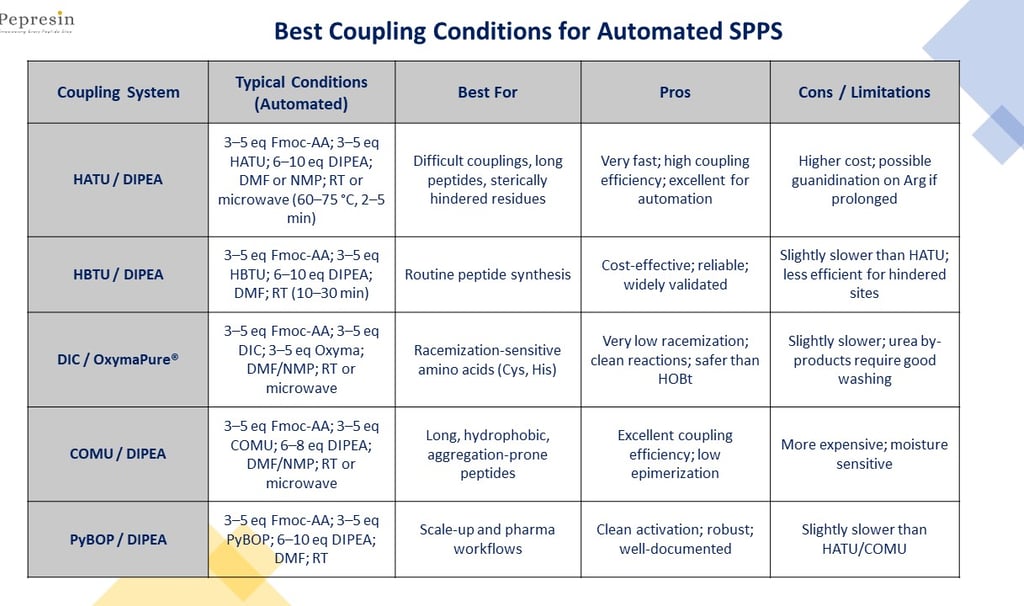
Best 5 coupling conditions for Solid-Phase Peptide Synthesis (SPPS) that are proven, automation-friendly, and widely used on automated peptide synthesizers (microwave & conventional). The focus is on speed, coupling completeness, low racemization, and robustness.
1) 𝗣𝗿𝗮𝗰𝘁𝗶𝗰𝗮𝗹 𝗔𝘂𝘁𝗼𝗺𝗮𝘁𝗶𝗼𝗻 𝗧𝗶𝗽𝘀 (𝗩𝗲𝗿𝘆 𝗜𝗺𝗽𝗼𝗿𝘁𝗮𝗻𝘁)
𝗠𝗶𝗰𝗿𝗼𝘄𝗮𝘃𝗲 𝗺𝗼𝗱𝗲:
Reduce equivalents (2–3 eq) but increase temperature (60–75 °C)
𝗗𝗼𝘂𝗯𝗹𝗲 𝗰𝗼𝘂𝗽𝗹𝗶𝗻𝗴 𝗿𝗲𝗰𝗼𝗺𝗺𝗲𝗻𝗱𝗲𝗱 𝗳𝗼𝗿:
Val, Ile, Thr, β-branched residues, N-terminal cyclization points
𝗖𝗮𝗽𝗽𝗶𝗻𝗴 𝘀𝘁𝗲𝗽 (𝗔𝗰𝟮𝗢/𝗗𝗜𝗣𝗘𝗔):
Highly recommended for long sequences (>20 aa)
𝗥𝗲𝘀𝗶𝗻 𝗰𝗵𝗼𝗶𝗰𝗲 𝗺𝗮𝘁𝘁𝗲𝗿𝘀:
Low-loading PEG or TentaGel® resins reduce aggregation
𝗦𝗼𝗹𝘃𝗲𝗻𝘁:
NMP > DMF for long or hydrophobic peptides on automated systems
2) ONE OPTIMAL COUPLING RECIPE (GOLD STANDARD)
Primary Recommendation (Works for 90% of Peptides)
𝗖𝗢𝗠𝗨 / 𝗗𝗜𝗣𝗘𝗔 𝗶𝗻 𝗗𝗠𝗙 𝗼𝗿 𝗡𝗠𝗣
Why this choice
• Highest coupling efficiency
• Very low racemization
• Excellent for long, hydrophobic, or difficult peptides
• Fully compatible with microwave & room-temperature instruments
𝗦𝘁𝗮𝗻𝗱𝗮𝗿𝗱 𝗖𝗵𝗲𝗺𝗶𝘀𝘁𝗿𝘆
• Fmoc-AA: 4.0 eq
• COMU: 4.0 eq
• DIPEA: 8.0 eq
• Solvent: NMP (preferred) or DMF
• Resin: PEG-based / low loading (0.2–0.4 mmol/g)
3) PROBLEM-SITE–SPECIFIC COUPLING STRATEGIES
🔴 β-𝗕𝗿𝗮𝗻𝗰𝗵𝗲𝗱 𝗥𝗲𝘀𝗶𝗱𝘂𝗲𝘀 (𝗩𝗮𝗹, 𝗜𝗹𝗲, 𝗧𝗵𝗿)
Problem: Steric hindrance
Solution:
• Switch to HATU / DIPEA
• Double coupling
• Microwave 70 °C, 2 × 3 min
🔴 𝗗𝗶𝗳𝗳𝗶𝗰𝘂𝗹𝘁 𝗠𝗼𝘁𝗶𝗳𝘀
• 𝗔𝘀𝗽–𝗚𝗹𝘆: DIC / Oxyma, RT, double coupling
• 𝗔𝘀𝗽–𝗔𝘀𝗽: Add 0.1 M HOBt or use COMU
• 𝗣𝗿𝗼–𝗣𝗿𝗼: HATU, extended time
• 𝗡-𝗠𝗲 𝗮𝗺𝗶𝗻𝗼 𝗮𝗰𝗶𝗱𝘀: HATU, pre-activation 1 min, double coupling
• 𝗖𝘆𝘀 / 𝗛𝗶𝘀: DIC / Oxyma only (avoid uronium salts)
𝗟𝗼𝗻𝗴 / 𝗛𝘆𝗱𝗿𝗼𝗽𝗵𝗼𝗯𝗶𝗰 𝗣𝗲𝗽𝘁𝗶𝗱𝗲𝘀 (>𝟮𝟱 𝗮𝗮)
• Use NMP instead of DMF
• Add double coupling every 5 residues
• Insert capping step (Ac₂O/DIPEA) every 5–10 cycles
• Use low-loading PEG resin