
Best 5 On-Resin Lactam Bridge Formation Conditions (Peptide Cyclization)
1/8/20261 min read
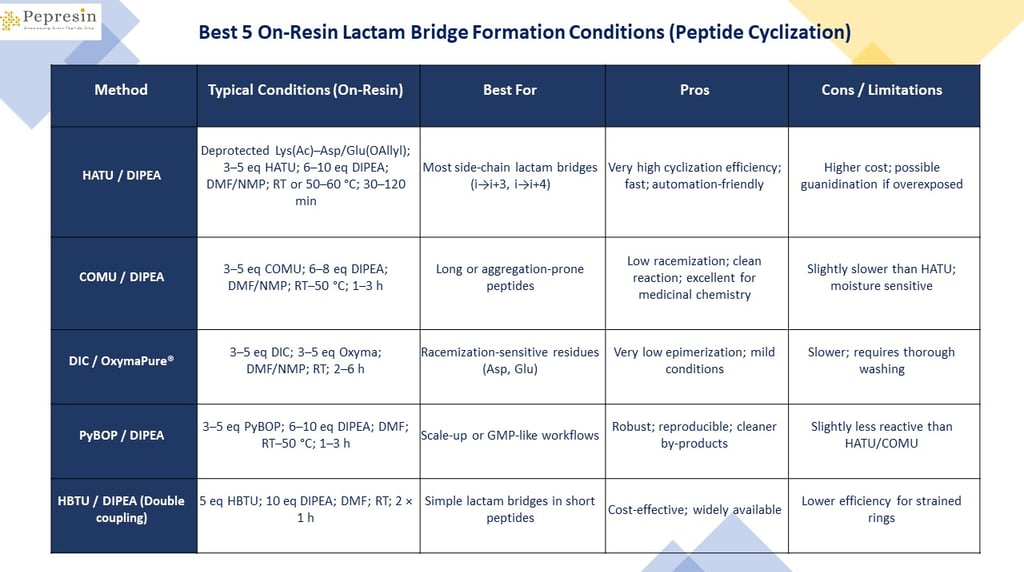
Best 𝟱 𝗼𝗻-𝗿𝗲𝘀𝗶𝗻 𝗹𝗮𝗰𝘁𝗮𝗺 𝗯𝗿𝗶𝗱𝗴𝗲 𝗳𝗼𝗿𝗺𝗮𝘁𝗶𝗼𝗻 𝗰𝗼𝗻𝗱𝗶𝘁𝗶𝗼𝗻𝘀 that are robust, automation-friendly, and widely used in medicinal-chemistry peptide synthesis. These methods are ranked for efficiency, selectivity, and compatibility with automated SPPS.Key Practical Guidelines (Critical for Success)
🔹 𝗢𝗿𝘁𝗵𝗼𝗴𝗼𝗻𝗮𝗹 𝗣𝗿𝗼𝘁𝗲𝗰𝘁𝗶𝗻𝗴 𝗚𝗿𝗼𝘂𝗽𝘀 (𝗠𝘂𝘀𝘁-𝗛𝗮𝘃𝗲)
• Lys: Alloc, ivDde, or Dde
• Asp/Glu: OAllyl or ODmab
• Deprotect only the two side chains involved before cyclization
🔹 𝗥𝗲𝘀𝗶𝗻 & 𝗚𝗲𝗼𝗺𝗲𝘁𝗿𝘆 𝗖𝗼𝗻𝘀𝗶𝗱𝗲𝗿𝗮𝘁𝗶𝗼𝗻𝘀
• Use low-loading PEG or TentaGel® resin (≤0.4 mmol/g)
• Ideal ring sizes:
• i→i+3, i→i+4: highest success
• i→i+2: strained, lower yields
• i→i+5+: may need longer time or higher temp
🔹 𝗔𝘂𝘁𝗼𝗺𝗮𝘁𝗶𝗼𝗻-𝗙𝗿𝗶𝗲𝗻𝗱𝗹𝘆 𝗘𝗻𝗵𝗮𝗻𝗰𝗲𝗺𝗲𝗻𝘁𝘀
• Apply gentle heating (50–60 °C) to improve conversion
• For difficult cyclizations:
• Double coupling
• Switch from HBTU → COMU or HATU
• Wash thoroughly after cyclization to remove uronium residues
🎯 𝗤𝘂𝗶𝗰𝗸 𝗠𝗲𝘁𝗵𝗼𝗱 𝗦𝗲𝗹𝗲𝗰𝘁𝗶𝗼𝗻 𝗚𝘂𝗶𝗱𝗲
Scenario Best Method
• General on-resin lactam bridge: HATU / DIPEA
• Racemization-sensitive sites: DIC / Oxyma
• Long / hydrophobic peptides: COMU / DIPEA
• GMP / scale-up: PyBOP / DIPEA
• Cost-sensitive, simple peptides: HBTU / DIPEA
🧠 𝗘𝘅𝗽𝗲𝗿𝘁 𝗠𝗲𝗱𝗶𝗰𝗶𝗻𝗮𝗹-𝗖𝗵𝗲𝗺𝗶𝘀𝘁𝗿𝘆 𝗧𝗶𝗽𝘀
• Perform lactam cyclization before N-terminal elongation if possible.
• Confirm completion by Kaiser test + LC–MS after cleavage.
• Avoid high base concentrations that can cause Asp→isoAsp formation.
• For stubborn cases, switch to solution-phase macrolactamization after partial cleavage.
#Peptidechemistry #SPPS #Cyclicpeptide #Lactambridge #Medicinalchemistry